
Back to Basics
What Is a Will and Why Do You Need One?
Denise Bonk, Attorney at Law
5/19/20266 min read


What Exactly Is a Will? (And Why Almost Everyone Needs One)
A will (sometimes called a “Last Will and Testament”) is a legal document that explains how you want your assets distributed after you pass away. it is one of the foundational documents of an estate plan, and it allows you to put your wishes in writing and decide what happens to the people, pets, and property you care about after your death.
Your will can allow you to:
Decide who receives your belongings and property
Name a guardian for minor children
Choose who will handle your estate (called an executor or personal representative)
Provide instructions for pets and their care (although a pet trust may be better, see last week's post Can Pets Inherit Money? | Denise Bonk, Attorney at Law)
Leave gifts to friends, family members, or charities
Help reduce confusion and disagreements among loved ones
Think of a will as your written voice when you can no longer speak for yourself.
What Happens If You Don't Have a Will?
Many people assume that if they die without a will, their assets automatically go where they want them to go. Unfortunately, that isn't how it works.
For example:
An unmarried partner may receive nothing
Close friends receive nothing
Someone you specifically would not have chosen could inherit assets
A court may decide who handles your estate
A judge may determine guardianship arrangements for minor children
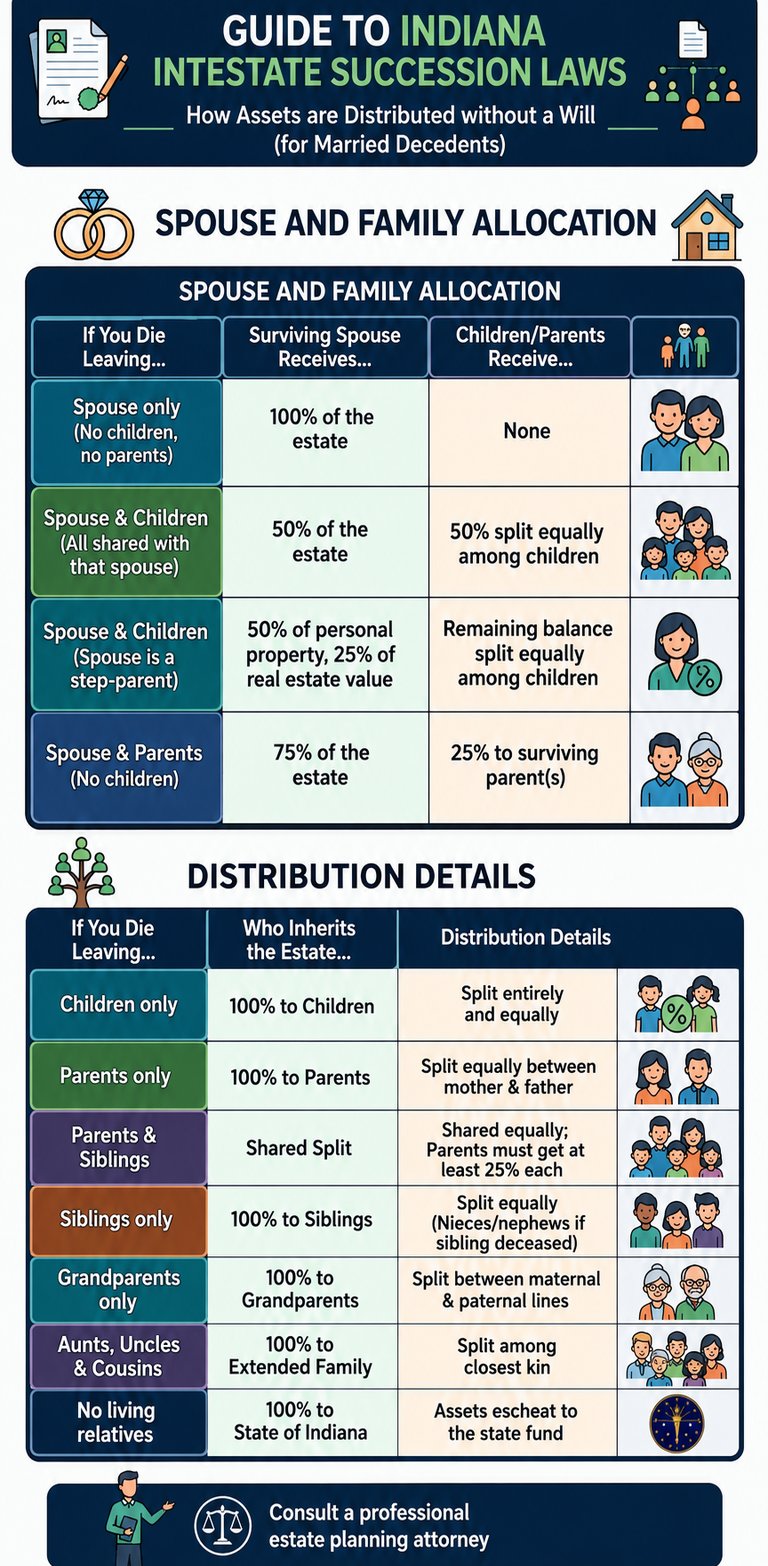
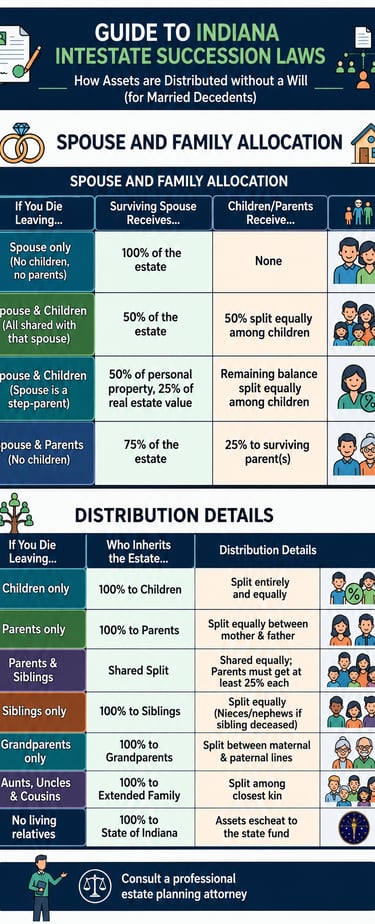
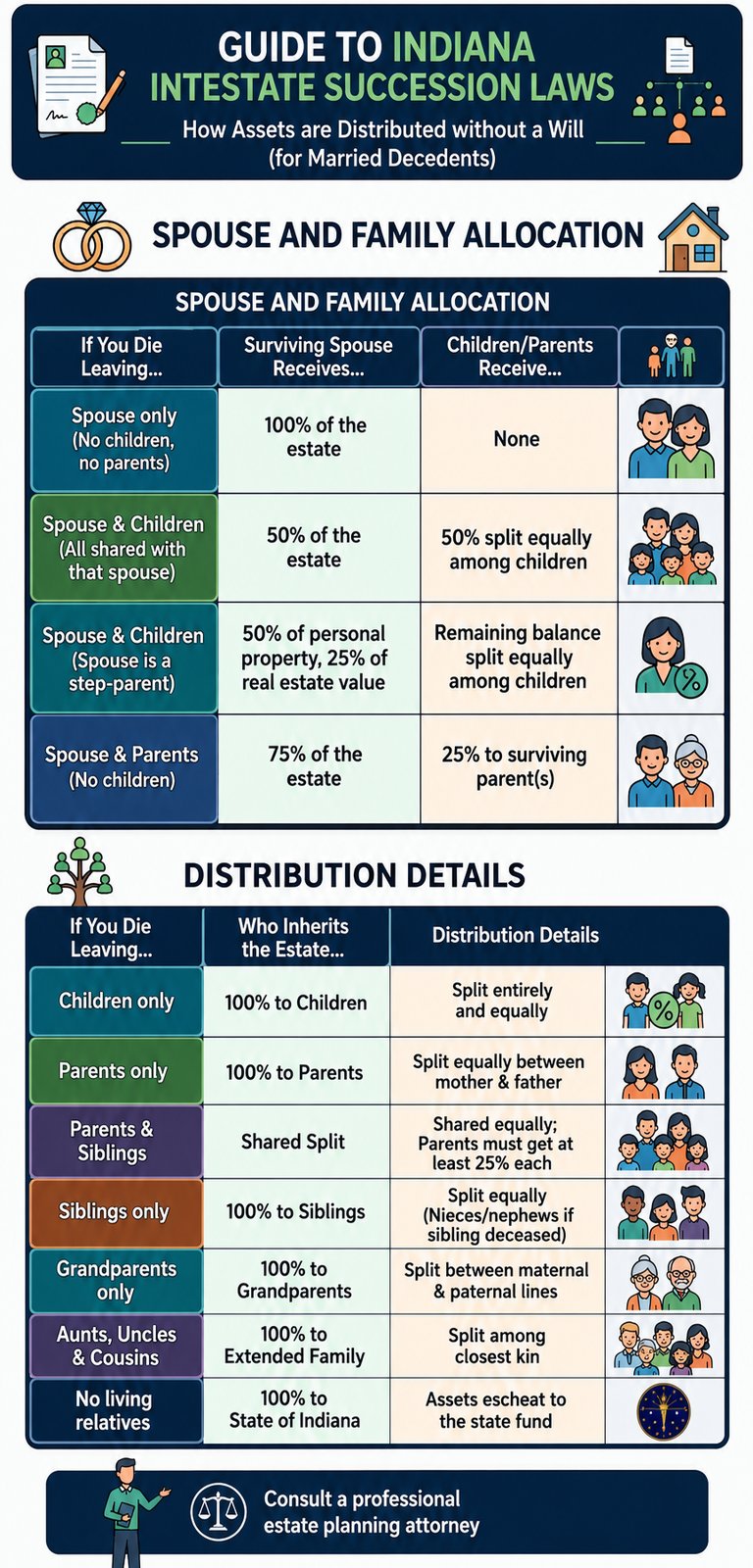
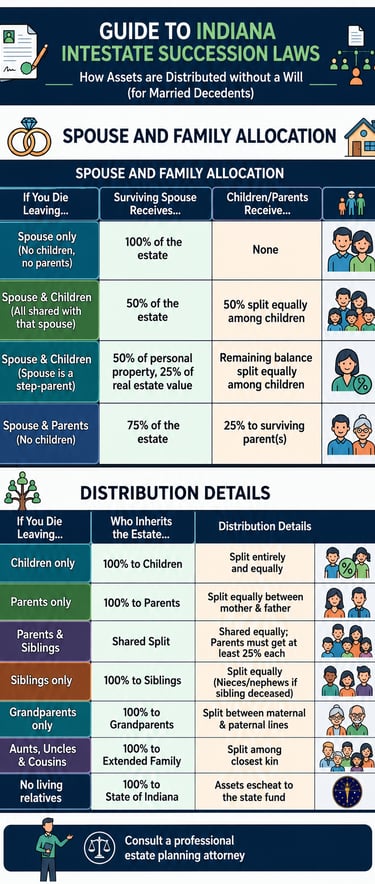
If you die without a valid will, you are considered to have died “intestate,” which means state law determines who receives your property. The court will follow the statute in your state rather than your personal wishes. That can create unexpected or unwanted results. The chart at the end of the post provides how assets will be distributed without a will for married people in the state of Indiana.
I’m Single. Do I Still Need a Will?
Absolutely.
For single individuals (which includes those partnered but not legally married), having a will can be especially important because there may not be a spouse who automatically steps into a decision-making role. Many single adults have strong relationships with friends, siblings, partners, nieces and nephews, or even beloved pets they want protected. A will gives you the ability to decide who receives your assets, who manages your estate, and who carries out your wishes.
Many single adults assume estate planning can wait until marriage, children, or retirement. But a will can be especially important for single individuals because there may not be a default decision-maker in place. See the chart at the end of this post provides asset distribution if you are unmarried and die without a will in the state of Indiana.
Does Having a Will Avoid Probate?
Probate is the legal process used to settle a person's estate after they die. It is essentially the court-supervised process of identifying assets, paying debts and taxes, and distributing what remains to the appropriate beneficiaries or heirs.
It's a common misconception, but no, a will does not automatically avoid probate.
Instead, a will provides instructions to the probate court about how your assets should be handled. Other estate planning tools such as trusts, beneficiary designations, and certain ownership arrangements may help avoid probate in some situations.
That is one reason estate planning is often more than simply creating a will.
Is a Will Enough?
For some people, a simple will may be a good starting point. For others, additional documents may be important, including:
Powers of attorney
Healthcare directives
Trusts
Pet trust provisions
Guardianship nominations
See prior posts that discuss these various legal documents in more detail Legal Document Preparation and Estate Planning Tips in Indiana | Denise Bonk, Attorney at Law
Final Thoughts
A will is not just for the wealthy, retirees, or people with large families.
If you have people you care about, pets you love, property you own, or wishes you want honored, a will can provide direction and peace of mind.
Creating a plan now can help make things easier for the people who matter most.
Ready to put a plan in place? Contact me today to start building an estate plan that reflects your life, your priorities, and the people (and pets) you love.
What Exactly Is a Will? (And Why Almost Everyone Needs One)
A will (sometimes called a “Last Will and Testament”) is a legal document that explains how you want your assets distributed after you pass away. it is one of the foundational documents of an estate plan, and it allows you to put your wishes in writing and decide what happens to the people, pets, and property you care about after your death.
Your will can allow you to:
Decide who receives your belongings and property
Name a guardian for minor children
Choose who will handle your estate (called an executor or personal representative)
Provide instructions for pets and their care (although a pet trust may be better, see last week's post Can Pets Inherit Money? | Denise Bonk, Attorney at Law)
Leave gifts to friends, family members, or charities
Help reduce confusion and disagreements among loved ones
Think of a will as your written voice when you can no longer speak for yourself.
What Happens If You Don't Have a Will?
Many people assume that if they die without a will, their assets automatically go where they want them to go. Unfortunately, that isn't how it works.
For example:
An unmarried partner may receive nothing
Close friends receive nothing
Someone you specifically would not have chosen could inherit assets
A court may decide who handles your estate
A judge may determine guardianship arrangements for minor children
If you die without a valid will, you are considered to have died “intestate,” which means state law determines who receives your property. The court will follow the statute in your state rather than your personal wishes. That can create unexpected or unwanted results. The chart at the end of the post provides how assets will be distributed without a will for married people in the state of Indiana.
I’m Single. Do I Still Need a Will?
Absolutely.
For single individuals (which includes those partnered but not legally married), having a will can be especially important because there may not be a spouse who automatically steps into a decision-making role. Many single adults have strong relationships with friends, siblings, partners, nieces and nephews, or even beloved pets they want protected. A will gives you the ability to decide who receives your assets, who manages your estate, and who carries out your wishes.
Many single adults assume estate planning can wait until marriage, children, or retirement. But a will can be especially important for single individuals because there may not be a default decision-maker in place. See the chart at the end of this post provides asset distribution if you are unmarried and die without a will in the state of Indiana.
Does Having a Will Avoid Probate?
Probate is the legal process used to settle a person's estate after they die. It is essentially the court-supervised process of identifying assets, paying debts and taxes, and distributing what remains to the appropriate beneficiaries or heirs.
It's a common misconception, but no, a will does not automatically avoid probate.
Instead, a will provides instructions to the probate court about how your assets should be handled. Other estate planning tools such as trusts, beneficiary designations, and certain ownership arrangements may help avoid probate in some situations.
That is one reason estate planning is often more than simply creating a will.
Is a Will Enough?
For some people, a simple will may be a good starting point. For others, additional documents may be important, including:
Powers of attorney
Healthcare directives
Trusts
Pet trust provisions
Guardianship nominations
See prior posts that discuss these various legal documents in more detail Legal Document Preparation and Estate Planning Tips in Indiana | Denise Bonk, Attorney at Law
Final Thoughts
A will is not just for the wealthy, retirees, or people with large families.
If you have people you care about, pets you love, property you own, or wishes you want honored, a will can provide direction and peace of mind.
Creating a plan now can help make things easier for the people who matter most.
Ready to put a plan in place? Contact me today to start building an estate plan that reflects your life, your priorities, and the people (and pets) you love.
Denise Bonk, Attorney at Law
317-202-5773 (talk or text available)
denise@dbonklaw.com
3250A West 86th Street, #1291
Indianapolis IN 46268
*Hours by appointment only*
© 2026. All rights reserved.
The information contained on this website is intended to introduce prospective clients to Denise Bonk, Attorney at Law and is not to be considered legal advice or an offer to represent you. This website is not intended to establish an attorney-client relationship. Emails sent to Denise Bonk, Attorney at Law through the use of this website, are not confidential and do not create an attorney-client relationship.